

Urgent reminder!Many ports in the United States are in emergency, with ships waiting to berth and te
- Author:Maintenance network
- Source:Maintenance network
- Release Date:2026-09-10
Hapag-Lloyd released the 36th week of North American port operation monitoring data. Ships were waiting for berthing at many core container ports in the United States. Congestion showed a concentrated outbreak of single-point terminals and was not a systemic paralysis of ports across the United States.
Significant differences in waiting time for ships at U.S. gateway ports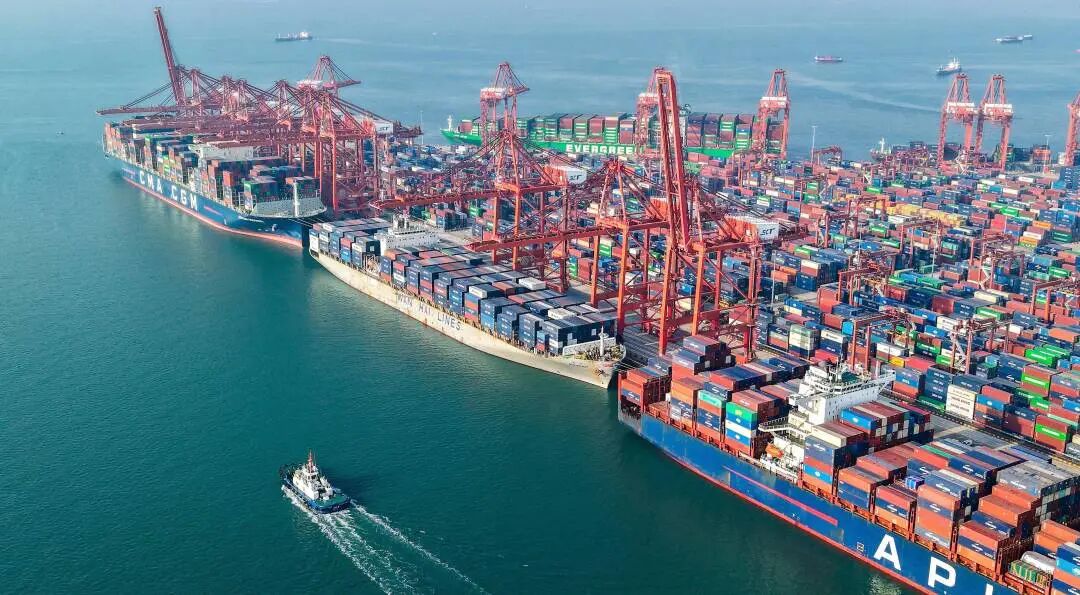
Congestion is most prominent in the Port of Charleston.At Wando Welch Terminal, ships on Gemini alliance routes can wait up to 6 hours, and ships on non-Gemini routes can wait up to 18 hours. There is currently no queue for ships on North Charleston Terminal.The trailer turnover efficiency is generally stable. The average truck turnover time at Wando Welch Terminal is about 24 minutes, and the North Charleston Terminal is about 23 minutes.There are obvious differences within the Port of Los Angeles in the West United States.APM Terminal has 400 berths and ships on multiple routes can wait for up to 12 hours. Yusen Terminal and Fenix Marine Services Terminal operate smoothly and there is no record of ships waiting.Despite berthing queues at 400 berths, the Los Angeles/Long Beach port gates are still open as planned.Congestion at the Port of Savannah has eased significantly compared with the previous period.Currently, Hapag-Lloyd's waiting time for most routes calling at the Georgia Port Authority port area is up to 6 hours, and the waiting time for TPI routes is about 3 hours.Comparing the data of the 35th week, Garden City Terminal had previously had Gemini and non-Gemini ships waiting for up to 18 hours, and the terminal pressure has dropped.Houston and Norfolk are experiencing moderate delays.Depending on the route, the longest waiting time at Barbours Cut Terminal in Houston is 6 hours, and the waiting time at Bayport Terminal is about 3 hours; the waiting time for ships at various terminals in Norfolk Port is generally 2-4 hours.In ports such as New York, Miami, Mobile, New Orleans, Seattle, and Tacoma, the waiting time of ships within the scope of Hapag-Lloyd's current monitoring route is 0, and operations remain stable.
Reasons for delays at various ports
Port of Charleston Port of Charleston: The terminal is closed and cargo volume is forced to be concentrated and diverted. Charleston is the core of this round of congestion. The root cause is the temporary suspension of container operations at the Hugh K. Leatherman Terminal since August 1.Due to factors such as uncertain trade prospects, weak cargo volume, and high terminal operating costs, the South Carolina Port Authority has transferred all ships and cargo flows from the original Leatherman Terminal to Wando Welch Terminal and North Charleston Terminal.A large number of shipping schedules are concentrated in Wando Welch, and berth resources are quickly occupied, resulting in uneven congestion.The North Charleston Terminal has sufficient capacity, so there is no waiting pressure.Los Angeles APMPier400 berth: The shipping schedules are stacked and the terminal operation bottleneck is increased. In the Los Angeles port area, only APM400 has a queue, and the other terminals are normal.The main reason is that the arrival times of ships on the trans-Pacific route are mismatched and ships arrive at the port in a cluster; Pier400, as the main automated terminal in Los Angeles, is responsible for more than 30% of the port's container volume. During the period when ships are concentrated at the port, berths and quay crane resources cannot match the arrival peak in a short time, resulting in short-term berthing.However, the port gate and container truck circulation system have not been affected, which is a local bottleneck.Port of Savannah: The early backlog has been digested, and congestion continues to ease. Savannah’s long wait for berth in the 35th week comes from the concentrated arrival of imported cargo at the port and the lengthening of the storage period of containers in the yard.After a week of dredging the port and picking up containers, the backlog at the terminal was gradually released, and the waiting time for berthing was significantly reduced. This is a repair process after a short-term backlog.Houston and Norfolk: Regional cargo flow fluctuations are mild disturbances. Moderate delays in Houston and Norfolk are mostly caused by uneven ship arrivals in phases. There are no major terminal shutdowns, labor disputes and other hard interruptions, and the scope of impact is limited.
Industry observation analysis
Impact on China's shipping and foreign trade export industries: The stability of shipping schedules has decreased, and the uncertainty of the timeliness of the East US route has increased.Goods sent by domestic export companies to the Wando Welch Terminal in Charleston still need to wait at the anchorage after the sea voyage. The overall door-to-door timeliness is lengthened, and the order delivery risk increases.Due to the bottleneck in Charleston, the US East Route has greater disruptions in shipping space and shipping schedules than the US West Route.The risk of container detention and port demurrage surcharges has increased.Waiting for ships to berth will also lead to delays in unloading and picking up containers. Once containers are stored at the terminal beyond the free period, demurrage/detention fees will be incurred, directly increasing the logistics costs of domestic freight forwarders and foreign trade companies.The value of route alternatives is highlighted.The market will see cargo flow diverted to surrounding ports such as Savannah, Jacksonville, and Norfolk. Some shipping companies may temporarily jump ports or change terminals. Freight forwarders need to evaluate alternative port plans in advance.Freight rates were partially under slight pressure.Single-point congestion will consume effective transportation capacity, and there will be slight upward pressure on spot freight rates on some routes in the eastern United States. However, since the entire territory is not paralyzed, freight rates will not surge. In the long term, supply and demand fundamentals will still dominate.The industry recommends that domestic freight forwarders and foreign trade companies must distinguish between ports and specific terminals when booking space, and cannot predict the time limit based on the port name alone.For high-risk points such as Wando Welch in Charleston and APM Pier 400 in Los Angeles, it is recommended to reserve shipping schedule buffers in advance; for time-sensitive cargo, neighboring terminals such as North Charleston and Savannah can be evaluated as alternatives.Before shipment, continue to follow the shipping company's weekly port operation announcements, prepare bills of lading and customs clearance materials in advance, shorten the waiting period for container pick-up at the destination port as much as possible, and avoid additional detention costs at the port.
Significant differences in waiting time for ships at U.S. gateway ports
Congestion is most prominent in the Port of Charleston.At Wando Welch Terminal, ships on Gemini alliance routes can wait up to 6 hours, and ships on non-Gemini routes can wait up to 18 hours. There is currently no queue for ships on North Charleston Terminal.The trailer turnover efficiency is generally stable. The average truck turnover time at Wando Welch Terminal is about 24 minutes, and the North Charleston Terminal is about 23 minutes.There are obvious differences within the Port of Los Angeles in the West United States.APM Terminal has 400 berths and ships on multiple routes can wait for up to 12 hours. Yusen Terminal and Fenix Marine Services Terminal operate smoothly and there is no record of ships waiting.Despite berthing queues at 400 berths, the Los Angeles/Long Beach port gates are still open as planned.Congestion at the Port of Savannah has eased significantly compared with the previous period.Currently, Hapag-Lloyd's waiting time for most routes calling at the Georgia Port Authority port area is up to 6 hours, and the waiting time for TPI routes is about 3 hours.Comparing the data of the 35th week, Garden City Terminal had previously had Gemini and non-Gemini ships waiting for up to 18 hours, and the terminal pressure has dropped.Houston and Norfolk are experiencing moderate delays.Depending on the route, the longest waiting time at Barbours Cut Terminal in Houston is 6 hours, and the waiting time at Bayport Terminal is about 3 hours; the waiting time for ships at various terminals in Norfolk Port is generally 2-4 hours.In ports such as New York, Miami, Mobile, New Orleans, Seattle, and Tacoma, the waiting time of ships within the scope of Hapag-Lloyd's current monitoring route is 0, and operations remain stable.
Reasons for delays at various ports
Port of Charleston Port of Charleston: The terminal is closed and cargo volume is forced to be concentrated and diverted. Charleston is the core of this round of congestion. The root cause is the temporary suspension of container operations at the Hugh K. Leatherman Terminal since August 1.Due to factors such as uncertain trade prospects, weak cargo volume, and high terminal operating costs, the South Carolina Port Authority has transferred all ships and cargo flows from the original Leatherman Terminal to Wando Welch Terminal and North Charleston Terminal.A large number of shipping schedules are concentrated in Wando Welch, and berth resources are quickly occupied, resulting in uneven congestion.The North Charleston Terminal has sufficient capacity, so there is no waiting pressure.Los Angeles APMPier400 berth: The shipping schedules are stacked and the terminal operation bottleneck is increased. In the Los Angeles port area, only APM400 has a queue, and the other terminals are normal.The main reason is that the arrival times of ships on the trans-Pacific route are mismatched and ships arrive at the port in a cluster; Pier400, as the main automated terminal in Los Angeles, is responsible for more than 30% of the port's container volume. During the period when ships are concentrated at the port, berths and quay crane resources cannot match the arrival peak in a short time, resulting in short-term berthing.However, the port gate and container truck circulation system have not been affected, which is a local bottleneck.Port of Savannah: The early backlog has been digested, and congestion continues to ease. Savannah’s long wait for berth in the 35th week comes from the concentrated arrival of imported cargo at the port and the lengthening of the storage period of containers in the yard.After a week of dredging the port and picking up containers, the backlog at the terminal was gradually released, and the waiting time for berthing was significantly reduced. This is a repair process after a short-term backlog.Houston and Norfolk: Regional cargo flow fluctuations are mild disturbances. Moderate delays in Houston and Norfolk are mostly caused by uneven ship arrivals in phases. There are no major terminal shutdowns, labor disputes and other hard interruptions, and the scope of impact is limited.
Industry observation analysis
Impact on China's shipping and foreign trade export industries: The stability of shipping schedules has decreased, and the uncertainty of the timeliness of the East US route has increased.Goods sent by domestic export companies to the Wando Welch Terminal in Charleston still need to wait at the anchorage after the sea voyage. The overall door-to-door timeliness is lengthened, and the order delivery risk increases.Due to the bottleneck in Charleston, the US East Route has greater disruptions in shipping space and shipping schedules than the US West Route.The risk of container detention and port demurrage surcharges has increased.Waiting for ships to berth will also lead to delays in unloading and picking up containers. Once containers are stored at the terminal beyond the free period, demurrage/detention fees will be incurred, directly increasing the logistics costs of domestic freight forwarders and foreign trade companies.The value of route alternatives is highlighted.The market will see cargo flow diverted to surrounding ports such as Savannah, Jacksonville, and Norfolk. Some shipping companies may temporarily jump ports or change terminals. Freight forwarders need to evaluate alternative port plans in advance.Freight rates were partially under slight pressure.Single-point congestion will consume effective transportation capacity, and there will be slight upward pressure on spot freight rates on some routes in the eastern United States. However, since the entire territory is not paralyzed, freight rates will not surge. In the long term, supply and demand fundamentals will still dominate.The industry recommends that domestic freight forwarders and foreign trade companies must distinguish between ports and specific terminals when booking space, and cannot predict the time limit based on the port name alone.For high-risk points such as Wando Welch in Charleston and APM Pier 400 in Los Angeles, it is recommended to reserve shipping schedule buffers in advance; for time-sensitive cargo, neighboring terminals such as North Charleston and Savannah can be evaluated as alternatives.Before shipment, continue to follow the shipping company's weekly port operation announcements, prepare bills of lading and customs clearance materials in advance, shorten the waiting period for container pick-up at the destination port as much as possible, and avoid additional detention costs at the port.