

More than 2,500 containers are floating on the sea!Shipwreck in Strait of Hormuz, cargo owners may f
- Author:Maintenance network
- Source:Maintenance network
- Release Date:2026-10-16
On October 14, local time, news came out of the Strait of Hormuz: A cargo ship carrying more than 2,500 containers hit a mine in the southern waters of the strait, exploded, caught fire, and eventually sank.One ship, more than 2,500 containers.For cargo owners, this may be a whole batch of export orders; for freight forwarders, it may involve booking space, cargo insurance, delivery arrangements, and who will bear the losses after an accident.For Chinese freight forwarders and cargo owners, they must not only pay attention to the accident itself, but also see clearly how the safety risks of merchant ships in the Strait of Hormuz are affecting actual transportation.
01 Shipwreck Identity Locked Feeder Network Under Impact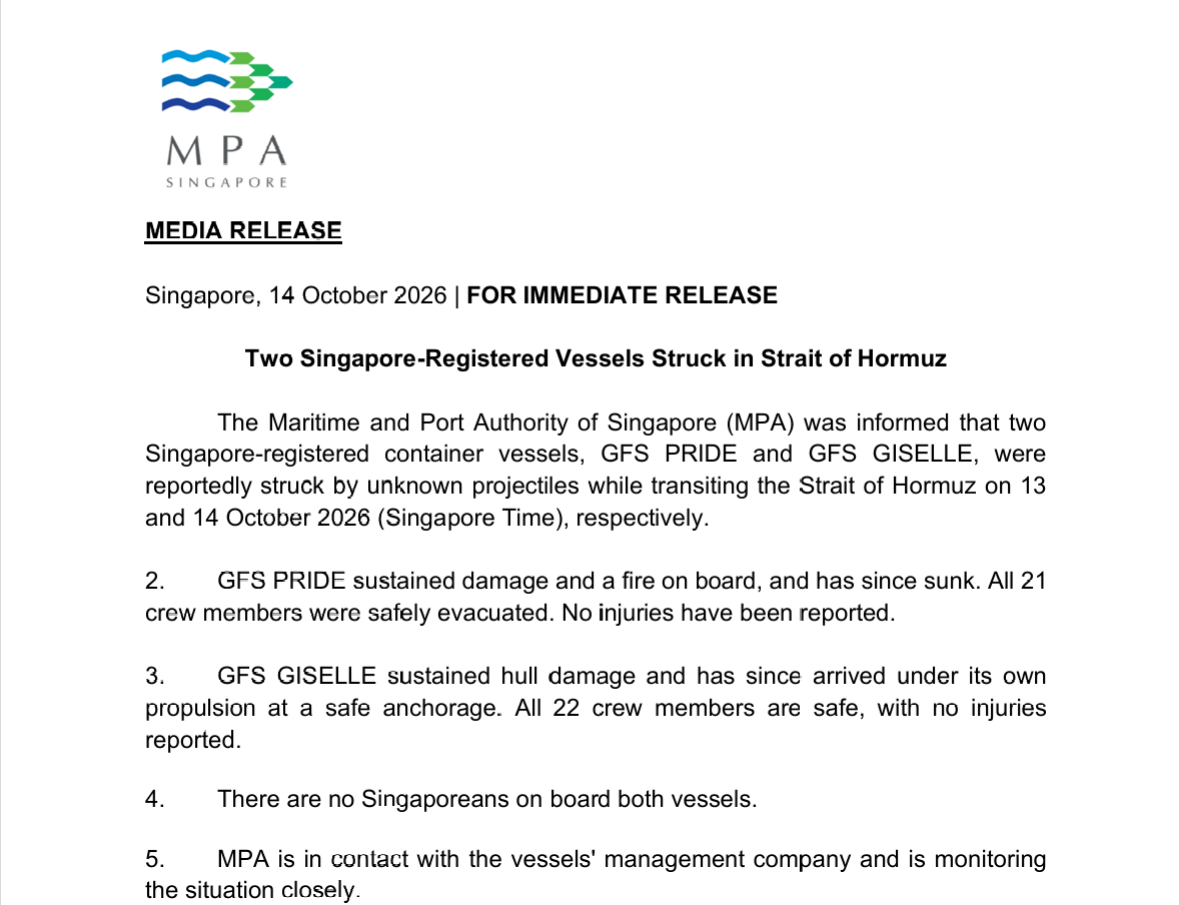
The protagonist of this sinking accident was quickly identified by the maritime safety agency as the Singaporean container ship "GFS PRIDE" (2824TEU).The ship is managed by GFS Ship Management FZE in Dubai, United Arab Emirates, and is part of Global Feeder Shipping (GFS), a subsidiary of Abu Dhabi Ports Group.GFS is a container feeder operator with deep roots in the Middle East, Asia and Africa markets. It has long provided regional cargo distribution services to world-renowned liner companies such as Maersk.This shipwreck not only means the total loss of a ship, but also directly cuts off the feeder transportation link that maintains the entry and exit of goods in the Gulf area.For goods that rely on regional transit, obstruction in this link may cause goods that have arrived at surrounding hub ports to be unable to be delivered as originally planned.1 "Strike a mine" or "Be hit"?Both sides hold different opinions on how "GFS PRIDE" sank. At present, both sides are still "differently disagreeing".Iran's Islamic Revolutionary Guard Corps Navy issued a statement on the 14th, saying that the ship carrying more than 2,500 containers had to take an "unauthorized and dangerous" route. As a result, it triggered a mine, exploded, caught fire, and sank.Iran also specifically reminded fishermen and passing ships to be careful of floating containers on the water.But maritime security circles and Western institutions simply don’t buy it.Reports from the UK Maritime Trade Operations Office (UKMTO) and multiple maritime intelligence companies point to an "unidentified projectile hit".Maririsks said it very bluntly in the warning: There is currently no independent evidence to prove that mines were responsible. Iran's statement is more like psychological warfare, with the purpose of creating panic and scaring everyone away.2 bulk carriers were not immune to the attack, setting a new high in the war. What is noteworthy is that this is not the only one that sank.According to a Reuters report on October 15, the bulk carrier "CAPE DAO" flying the Antigua and Barbuda flag was also confirmed to be sinking around the 14th.The ship was hit by an unknown missile on September 23, and it took several weeks to survive.Within a day, both the container ship and the bulk carrier sank, an extremely rare serious total loss since the conflict broke out at the end of February this year.Data from the UK Maritime Trade Operations Office (UKMTO) shows that on October 13 alone, there were four attacks on merchant ships. In addition to the two GFS ships, there were also the container ship "AL SAADIYAT" and the oil tanker "ALFONSO".According to statistics from maritime intelligence company Windward AI, the number of attacks on merchant ships around the entire strait reached 12 last week, setting a record since the war began.Only half of October has passed, and already about 24 ships have been hit, more than all of September combined.
02The core dispute is general average or the ship’s fault?
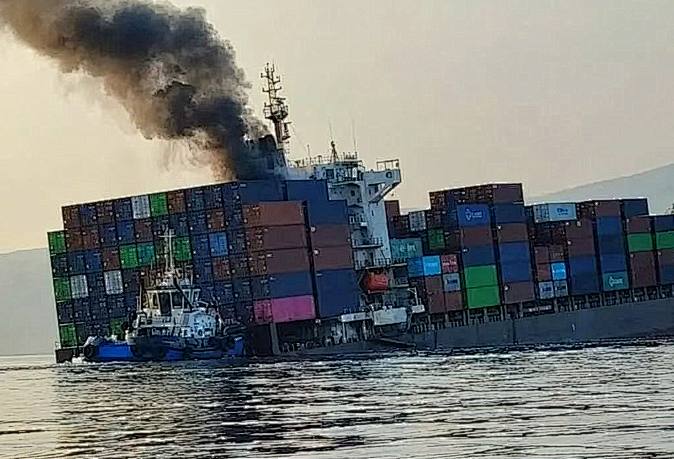
Everyone is familiar with what the sinking of a ship means for the cargo carried on the ship.If the cargo sinks to the bottom of the sea with the ship, it may face actual total loss; if the container falls into the water, is damaged, or the cargo is soaked by sea water, further verification of the cargo damage is required.Whether the goods can be compensated and who will bear the losses must be determined based on the cargo insurance terms, transportation contract and accident investigation results.There is also a real risk that floating containers could pose additional hazards to nearby ship traffic.The Iranian Revolutionary Guards Navy has warned local ships and fishermen to stay out of the way.For merchant ships that need to pass through relevant sea areas, in addition to paying attention to navigation warnings, they also need to pay attention to whether shipping companies adjust routes, modify sailing schedules, or take other safety measures.For Chinese freight forwarders and cargo owners, the most practical question is often not "can we still cross the strait?" but whether the goods on hand can still go as originally planned.If a shipping company adjusts its route, delays port calls, or changes transportation arrangements due to safety risks, cargo owners need to recheck delivery deadlines, inventory arrangements, and follow-up orders; freight forwarders need to confirm carrier notifications in a timely manner to avoid using expired shipping schedule information.At present, public notifications are not enough to prove that the shipwreck has led to a complete closure of the Strait of Hormuz, and there is no reliable data to quantify the impact on China's exports.Specific transportation arrangements should still be subject to the latest notices from shipping companies and relevant maritime agencies.1. If general average is subsequently declared, does the cargo owner have to contribute?After a ship suffers major average damage, one of the most worrying issues for cargo owners is whether they will receive a general average allocation notice.General average does not mean that after an accident occurs to a ship, the shipowner can equally distribute all losses to the cargo owners.According to the common general average rules in maritime transport, it is usually necessary to have intentional and reasonable extraordinary measures taken for the common safety, which will result in conditions such as special sacrifices or expenses.The fact that a ship strikes a mine, catches fire or sinks does not automatically mean that general average is established.In addition, the cause of the accident and whether general average is established cannot be simply equated.Even if the subsequent investigation finds that the ship has problems with route selection or operation, it is still necessary to judge its impact on general average and the liability of all parties in combination with applicable laws, contracts of carriage, relevant average rules and specific facts.It cannot be concluded that the ship was legally negligent solely based on Iran's so-called "unauthorized route", nor can it be directly concluded that the cargo owner can refuse to share the burden.If a general average guarantee or apportionment notice is subsequently received, the cargo owner and freight forwarder can do a few things first: First, verify whether the notice comes from the shipowner, carrier or its officially appointed adjuster, and confirm the ship name, bill of lading number and cargo information.Second, contact the cargo insurer as soon as possible to check whether the policy involves general average guarantee, contribution and related claims arrangements.Third, properly keep bills of lading, commercial invoices, packing lists, insurance policies, carrier notifications and related communication records.If you have any questions about the cause of the accident or the ship's responsibility, you should promptly consult the insurance company or professional maritime legal advisor.Do not directly assume that you must bear a certain amount just because you receive a GA notice, and do not rashly assume that you can refuse all shared liability without verifying the contract and legal basis.
03 Deep connection with China’s shipping industry Although the “GFS PRIDE” ship flies the Singapore flag and is managed by a UAE company, this accident has a knock-on impact on China’s shipping industry that cannot be ignored.First of all, China is the world's largest container manufacturer and exporter, and the Middle East route is one of the important channels for China's foreign trade exports.A large number of Chinese-made electronic products, machinery and daily necessities are transited through the Gulf region through feeder networks.The business disruption of feeder operators such as GFS will directly cause China's goods exported to the Middle East to face the risk of delays in transit, delays in ports, and even returns.Secondly, Chinese shipowners and freight forwarding companies are important participants in the Middle East routes.At present, navigation risks in the Strait of Hormuz have increased sharply. Chinese ships or ships operating in China will face higher war insurance premiums and stricter security requirements when passing through these waters.At the same time, due to the paralysis of the feeder network, Chinese freight forwarding companies may need to urgently adjust their logistics plans and reroute goods to Sohar Port in Oman or Fujairah Port in the United Arab Emirates for transit, which will significantly increase transportation costs and time costs.In addition, the accident also exposed the vulnerability of international shipping in a complex geopolitical environment.For China's shipping industry, which is promoting the "One Belt, One Road" initiative, how to ensure the safety of key waterways and establish diversified logistics backup channels has become an urgent strategic issue that needs to be solved.1 Industry Observation In view of the current situation, enterprises and practitioners related to China's shipping industry need to remain highly vigilant.It is recommended to immediately check the location of goods in transit and assess the risk of delay; give priority to switching to alternative routes such as land transportation or railway to spread risks; for orders in affected areas, proactively communicate with customers about postponement expectations to avoid commercial disputes.At the same time, the inventory structure should be optimized and safety stocks should be increased to cope with sudden supply interruptions.In terms of business planning, be sure to confirm the policy terms with your insurance broker, especially the claim boundaries for war insurance and strike insurance, and make adequate emergency preparations.
01 Shipwreck Identity Locked Feeder Network Under Impact
The protagonist of this sinking accident was quickly identified by the maritime safety agency as the Singaporean container ship "GFS PRIDE" (2824TEU).The ship is managed by GFS Ship Management FZE in Dubai, United Arab Emirates, and is part of Global Feeder Shipping (GFS), a subsidiary of Abu Dhabi Ports Group.GFS is a container feeder operator with deep roots in the Middle East, Asia and Africa markets. It has long provided regional cargo distribution services to world-renowned liner companies such as Maersk.This shipwreck not only means the total loss of a ship, but also directly cuts off the feeder transportation link that maintains the entry and exit of goods in the Gulf area.For goods that rely on regional transit, obstruction in this link may cause goods that have arrived at surrounding hub ports to be unable to be delivered as originally planned.1 "Strike a mine" or "Be hit"?Both sides hold different opinions on how "GFS PRIDE" sank. At present, both sides are still "differently disagreeing".Iran's Islamic Revolutionary Guard Corps Navy issued a statement on the 14th, saying that the ship carrying more than 2,500 containers had to take an "unauthorized and dangerous" route. As a result, it triggered a mine, exploded, caught fire, and sank.Iran also specifically reminded fishermen and passing ships to be careful of floating containers on the water.But maritime security circles and Western institutions simply don’t buy it.Reports from the UK Maritime Trade Operations Office (UKMTO) and multiple maritime intelligence companies point to an "unidentified projectile hit".Maririsks said it very bluntly in the warning: There is currently no independent evidence to prove that mines were responsible. Iran's statement is more like psychological warfare, with the purpose of creating panic and scaring everyone away.2 bulk carriers were not immune to the attack, setting a new high in the war. What is noteworthy is that this is not the only one that sank.According to a Reuters report on October 15, the bulk carrier "CAPE DAO" flying the Antigua and Barbuda flag was also confirmed to be sinking around the 14th.The ship was hit by an unknown missile on September 23, and it took several weeks to survive.Within a day, both the container ship and the bulk carrier sank, an extremely rare serious total loss since the conflict broke out at the end of February this year.Data from the UK Maritime Trade Operations Office (UKMTO) shows that on October 13 alone, there were four attacks on merchant ships. In addition to the two GFS ships, there were also the container ship "AL SAADIYAT" and the oil tanker "ALFONSO".According to statistics from maritime intelligence company Windward AI, the number of attacks on merchant ships around the entire strait reached 12 last week, setting a record since the war began.Only half of October has passed, and already about 24 ships have been hit, more than all of September combined.
02The core dispute is general average or the ship’s fault?
Everyone is familiar with what the sinking of a ship means for the cargo carried on the ship.If the cargo sinks to the bottom of the sea with the ship, it may face actual total loss; if the container falls into the water, is damaged, or the cargo is soaked by sea water, further verification of the cargo damage is required.Whether the goods can be compensated and who will bear the losses must be determined based on the cargo insurance terms, transportation contract and accident investigation results.There is also a real risk that floating containers could pose additional hazards to nearby ship traffic.The Iranian Revolutionary Guards Navy has warned local ships and fishermen to stay out of the way.For merchant ships that need to pass through relevant sea areas, in addition to paying attention to navigation warnings, they also need to pay attention to whether shipping companies adjust routes, modify sailing schedules, or take other safety measures.For Chinese freight forwarders and cargo owners, the most practical question is often not "can we still cross the strait?" but whether the goods on hand can still go as originally planned.If a shipping company adjusts its route, delays port calls, or changes transportation arrangements due to safety risks, cargo owners need to recheck delivery deadlines, inventory arrangements, and follow-up orders; freight forwarders need to confirm carrier notifications in a timely manner to avoid using expired shipping schedule information.At present, public notifications are not enough to prove that the shipwreck has led to a complete closure of the Strait of Hormuz, and there is no reliable data to quantify the impact on China's exports.Specific transportation arrangements should still be subject to the latest notices from shipping companies and relevant maritime agencies.1. If general average is subsequently declared, does the cargo owner have to contribute?After a ship suffers major average damage, one of the most worrying issues for cargo owners is whether they will receive a general average allocation notice.General average does not mean that after an accident occurs to a ship, the shipowner can equally distribute all losses to the cargo owners.According to the common general average rules in maritime transport, it is usually necessary to have intentional and reasonable extraordinary measures taken for the common safety, which will result in conditions such as special sacrifices or expenses.The fact that a ship strikes a mine, catches fire or sinks does not automatically mean that general average is established.In addition, the cause of the accident and whether general average is established cannot be simply equated.Even if the subsequent investigation finds that the ship has problems with route selection or operation, it is still necessary to judge its impact on general average and the liability of all parties in combination with applicable laws, contracts of carriage, relevant average rules and specific facts.It cannot be concluded that the ship was legally negligent solely based on Iran's so-called "unauthorized route", nor can it be directly concluded that the cargo owner can refuse to share the burden.If a general average guarantee or apportionment notice is subsequently received, the cargo owner and freight forwarder can do a few things first: First, verify whether the notice comes from the shipowner, carrier or its officially appointed adjuster, and confirm the ship name, bill of lading number and cargo information.Second, contact the cargo insurer as soon as possible to check whether the policy involves general average guarantee, contribution and related claims arrangements.Third, properly keep bills of lading, commercial invoices, packing lists, insurance policies, carrier notifications and related communication records.If you have any questions about the cause of the accident or the ship's responsibility, you should promptly consult the insurance company or professional maritime legal advisor.Do not directly assume that you must bear a certain amount just because you receive a GA notice, and do not rashly assume that you can refuse all shared liability without verifying the contract and legal basis.
03 Deep connection with China’s shipping industry Although the “GFS PRIDE” ship flies the Singapore flag and is managed by a UAE company, this accident has a knock-on impact on China’s shipping industry that cannot be ignored.First of all, China is the world's largest container manufacturer and exporter, and the Middle East route is one of the important channels for China's foreign trade exports.A large number of Chinese-made electronic products, machinery and daily necessities are transited through the Gulf region through feeder networks.The business disruption of feeder operators such as GFS will directly cause China's goods exported to the Middle East to face the risk of delays in transit, delays in ports, and even returns.Secondly, Chinese shipowners and freight forwarding companies are important participants in the Middle East routes.At present, navigation risks in the Strait of Hormuz have increased sharply. Chinese ships or ships operating in China will face higher war insurance premiums and stricter security requirements when passing through these waters.At the same time, due to the paralysis of the feeder network, Chinese freight forwarding companies may need to urgently adjust their logistics plans and reroute goods to Sohar Port in Oman or Fujairah Port in the United Arab Emirates for transit, which will significantly increase transportation costs and time costs.In addition, the accident also exposed the vulnerability of international shipping in a complex geopolitical environment.For China's shipping industry, which is promoting the "One Belt, One Road" initiative, how to ensure the safety of key waterways and establish diversified logistics backup channels has become an urgent strategic issue that needs to be solved.1 Industry Observation In view of the current situation, enterprises and practitioners related to China's shipping industry need to remain highly vigilant.It is recommended to immediately check the location of goods in transit and assess the risk of delay; give priority to switching to alternative routes such as land transportation or railway to spread risks; for orders in affected areas, proactively communicate with customers about postponement expectations to avoid commercial disputes.At the same time, the inventory structure should be optimized and safety stocks should be increased to cope with sudden supply interruptions.In terms of business planning, be sure to confirm the policy terms with your insurance broker, especially the claim boundaries for war insurance and strike insurance, and make adequate emergency preparations.