

Freight prices skyrocketed by 250%!The peak season of the Middle East route is completely out of
- Author:Maintenance network
- Source:Maintenance network
- Release Date:2026-11-12
Navigation in the Strait of Hormuz was blocked, and cargo owners concentrated on diverting their goods to ports outside the Strait. Freight rates on the route from the Far East to the Middle East continued to rise.The latest data shows that the freight index from China to the Middle East has increased by 250% from the beginning of the year, and port congestion in Fujairah and Khor Fakkan has reached historical highs.The alternative channels originally used to divert goods are now beginning to come under tremendous pressure.
1 Freight rates on Middle East routes soared by 250%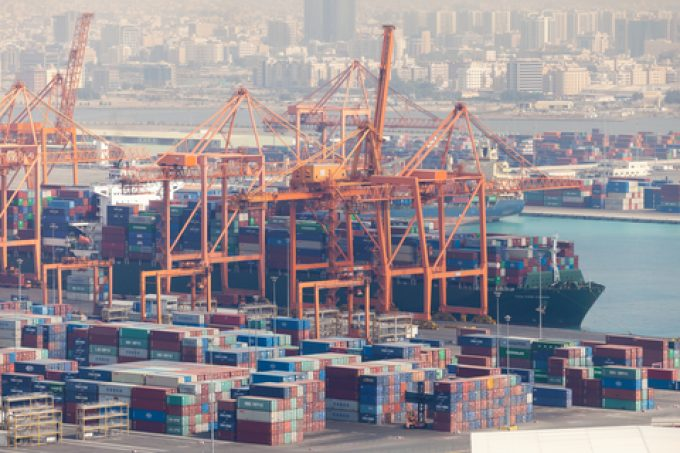
1 Freight rates on Middle East routes soared by 250%
During the peak season this year, the performance of the Middle East route was somewhat abnormal: cargo volume did not fully recover, but freight rates rose first.On November 10, the British shipping media "The Loadstar" published the latest data from Container Trades Statistics (CTS), which pointed out that the freight index from Greater China to the Middle East reached 392 in September, an increase of 250% from the beginning of the year and a month-on-month increase of 15.5%.However, during the same period, the freight volume of this route year-to-date is still down 12% year-on-year.The cargo volume has not yet fully recovered, so why has the freight rate increased so sharply?The key lies in the changes in the situation around the Strait of Hormuz.Due to the increased transportation risks in ports within the Gulf, many importers have begun to rush shipments in advance and send goods to alternative ports outside the strait.CTS data shows that in September, cargo volume from China to the Middle East exceeded the same period last year for the first time, and it was also the first time this happened since January to February this year.The traditional peak seasons are superimposed on concentrated rush shipments. The limited shipping space and port processing capacity are quickly pushed to high levels, and freight rates naturally rise accordingly.
2 alternative ports are also crowded
2 alternative ports are also crowded
Originally, in order to avoid the risk of the strait, cargo owners and shipping companies turned their attention to alternative ports on the east coast of the United Arab Emirates.Among them, the Port of Fujairah and the Port of Khorfakkan have become important cargo transit nodes.After the goods are unloaded at these ports, they are then transported by land to Dubai and other Gulf countries via trucks.It seems that there is an extra way, but the actual operation is not as easy as imagined.On November 10, "The Loadstar" quoted shipping analysis agency Linerlytica as saying that port congestion in the Middle East has risen to historical highs, with the situation in Fujairah and Khor Fakkan being particularly prominent.What’s even more troublesome is that some shipping companies have begun to adjust their calling arrangements.The report mentioned that MSC has arranged for a 24,000TEU-class large container ship to be deployed on the new Far East-Middle East route and call at Khor Fakkan Port, which was already experiencing serious berthing delays.Some shipping companies have even suspended bookings for receiving some cargo in Khor Fakkan and Fujairah.This creates a somewhat embarrassing situation: in order to avoid the risk of the strait, cargo owners transfer goods to alternative ports; the more concentrated the goods are, the more congested the alternative ports will be; the more congested the ports are, the more difficult it will be to arrange subsequent transshipments.1 million TEUs were diverted to land and sea transport channels under pressure, and land transport began to take on more tasks.On November 10, the shipping media "Seatrade Maritime" published a report disclosing Dubai World's (DP World) alternative transportation arrangements during the period when navigation in the strait is blocked.DP World revealed that since the first week of March this year, the group has transshipped more than 1 million TEU container cargo through alternative land corridors.In order to cope with the growth in cargo volume, the group has expanded its self-operated truck fleet from zero to approximately 3,000 vehicles and established a bonded transportation channel connecting the UAE's east coast ports and Jebel Ali Port.In addition, alternative transport routes via the ports of Sohar and Duqm are being developed in cooperation with local port operators in Oman.However, land transfer is not a free shortcut.The person in charge of DP World said that the container freight rate from China to Dubai has increased from about US$2,000 to US$10,000-12,000.Longer trucking distances, port congestion and rising diesel prices are also driving up overall logistics costs.Shipping companies adjust operations Port congestion is not exclusive to Fujairah and Khor Fakkan.The 44th week of Middle East operations update released by Hapag-Lloyd on October 30 showed that the operating efficiency of multiple ports has been affected: Jebel Ali Port: Only temporary ship calls are currently arranged.Salalah Port: The yard density reached 84%, and ship berthing delays were up to 36 hours.Sohar Port: Berthing delay reaches 2-3 days.Bahrain Port: Berthing delays can reach up to 2 days.Mundra Port, India: yard density exceeds 73%.Nawasheva Port, India: yard density exceeds 72%.In addition, the density of some terminals in Colombo Port exceeds 110%, and the transshipment backlog in the port exceeds 50,000 TEU.Hapag-Lloyd also said that due to the situation in the Suez Canal, space on some routes in the Middle East and India markets is limited. The company has strengthened booking management and implemented restrictions on batch bookings and partial booking modifications that exceed the agreed quantity.It can be seen from these operational data that the pressure on the Middle East route has spread from a single port to the entire transportation chain.Ships are waiting for berths, storage yards are backlogged, and space is tight. Several problems are added together, and it is not easy for goods to reach their destination smoothly.
3 Chinese freight forwarders need to pay attention. For Chinese freight forwarders, the biggest headache in the Middle East routes may not be that they cannot find the ship, but the uncertain costs after the goods leave the port.For goods whose destination ports are Dubai, Saudi Arabia, Qatar, Kuwait and other Gulf countries, you need to confirm the actual unloading port before booking, whether land transshipment is involved, and who is responsible for transshipment costs, customs clearance and terminal delivery.Especially for goods where customers have a clear delivery date, they cannot just make a commitment based on the shipping quotation and estimated shipping date.In the event of prolonged congestion at alternative ports, subsequent trucking and destination deliveries may be affected.At present, the transportation chain of the Middle East route is being readjusted.For freight forwarders, it is more important to leave sufficient cost space when quoting, verify the shipping company's latest call arrangements before booking, and clearly explain possible additional costs to customers in advance, rather than simply striving for a low freight rate.
3 Chinese freight forwarders need to pay attention. For Chinese freight forwarders, the biggest headache in the Middle East routes may not be that they cannot find the ship, but the uncertain costs after the goods leave the port.For goods whose destination ports are Dubai, Saudi Arabia, Qatar, Kuwait and other Gulf countries, you need to confirm the actual unloading port before booking, whether land transshipment is involved, and who is responsible for transshipment costs, customs clearance and terminal delivery.Especially for goods where customers have a clear delivery date, they cannot just make a commitment based on the shipping quotation and estimated shipping date.In the event of prolonged congestion at alternative ports, subsequent trucking and destination deliveries may be affected.At present, the transportation chain of the Middle East route is being readjusted.For freight forwarders, it is more important to leave sufficient cost space when quoting, verify the shipping company's latest call arrangements before booking, and clearly explain possible additional costs to customers in advance, rather than simply striving for a low freight rate.