
20 companies including Luxshare and Foxconn were involved in the US Section 337 investigation, and 6
- Author:Maintenance network
- Source:Maintenance network
- Release Date:2026-10-10
On one side, AI servers and power system supply chains are involved in U.S. patent investigations, and on the other side, ships related to Iranian energy transportation are included in the sanctions list.From October 8th to 9th, the United States announced two measures in succession, involving electronic manufacturing, server power supply systems, and international energy transportation.For companies engaged in export, space booking and ship operations, although these two pieces of news are not the same type of cases, they may affect whether goods can smoothly enter the target market and whether transactions can continue.
01AI power supply system is listed by Chaluxun, Foxconn and other companies
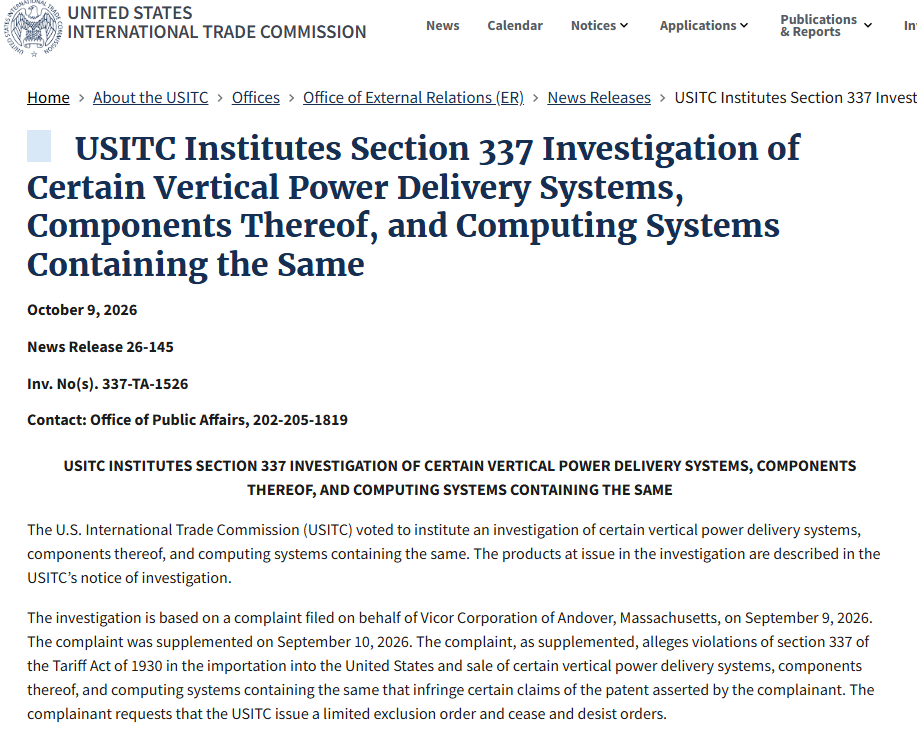
On October 9, local time, the U.S. International Trade Commission (USITC) announced that it has officially launched a Section 337 investigation into specific vertical power transmission systems, related components, and computing systems containing such systems.This investigation does not involve ordinary consumer electronics products, but the power supply technology used in computing systems. Related equipment is connected to servers and AI computing infrastructure.According to the USITC announcement, this case was filed by Vicor Corporation of the United States on September 9, and additional materials were added on September 10.The complainant alleged that the relevant products infringed on its patent rights and requested the United States to issue a limited exclusion order and injunction.Companies such as Luxshare Precision, Dongguan Luxshare Technology, Foxconn Industrial Internet, Hon Hai Precision, Delta Electronics, Quanta Computer and Wenda Technology are all listed as defendants. Companies such as Infineon, Core Source Systems, Flextronics, and Celestica Technology are also on the list, with a total of 20 companies.It should be noted that the initiation of Section 337 investigation does not mean that infringement has been established.Follow-up still needs to go through evidence exchange, hearing and related adjudication procedures.But for relevant companies, they cannot wait until the final ruling is issued before checking their export business.If an exclusion order is eventually issued, the products involved may be banned from entering the U.S. market; if the relevant companies still have inventory, sales and other businesses in the United States, they also need to evaluate whether the execution scope of the prohibition order is involved.
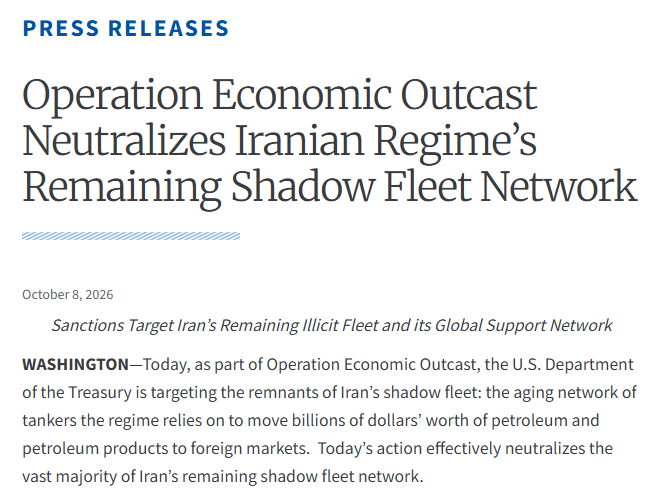
If the Section 337 investigation focuses on whether products can enter the U.S. market, then another measure announced on October 8 directly points to the international energy transportation chain.The U.S. Department of the Treasury’s Office of Foreign Assets Control (OFAC) announced on the same day a new round of sanctions targeting Iran’s “shadow fleet” and related support networks.The U.S. Treasury Department said the operation involved 17 ships transporting Iranian crude oil and petrochemical products, as well as related companies.Among them, 6 ships related to Chinese affiliated companies were named: STARWAY, GAS LUCKY, G SPRING, KING CHAIN, AVA 6, and NOBLE SEA.The U.S. Treasury Department said these ships had transported Iranian naphtha, ethylene, liquefied petroleum gas, methanol and other products, with destinations involving China and other Asian markets.Relevant companies listed include Hechuang International Group Co., Ltd., Shunhang Ship Management Co., Ltd., JLS Dragon Company Limited, Standwill Shipping Limited, Brich Shipping Company Limited and Saint Abundant International Co Limited.It should be emphasized that the above transportation situation is an allegation in the U.S. Treasury Department’s announcement and cannot be directly regarded as an independently verified fact.03For freight forwarders and ship owners, what really needs to be checked is the business chain.
The impact paths of the two measures are not the same.The focus of the 337 investigation is whether the product involves the asserted patent, and the exclusion measures that related products may face after entering the U.S. market.For export companies involved in AI servers, power components and computing equipment, product models, supplier relationships and U.S. import arrangements all require further verification.Sanctions involve a different set of issues.After being included in OFAC's Specially Designated Nationals List (SDN List), the assets of the relevant subject within the jurisdiction of the United States may be frozen, and transactions with U.S. persons are generally prohibited.The U.S. Treasury Department may also extend sanctions risks to other parties that help circumvent sanctions in accordance with relevant regulations.For shipping companies and freight forwarders, the risk is not just whether the ship name appears on the list.Ship ownership, actual operator, charter relationship, source of goods, payment entities and insurance arrangements may all affect whether a business can continue to advance.Especially when it comes to the transportation of Iranian energy goods, if it looks normal when booking, it does not mean that there will be no problems in subsequent settlement, insurance or delivery.For relevant companies, it is recommended to check the latest sanctions list and the scope of products involved as soon as possible, and complete necessary compliance screening before receiving orders, signing contracts, and making payments.For Section 337 cases that are still in the investigation stage, complaints and accusations should also be distinguished from final rulings to avoid directly equating "under investigation" with "infringement."The two measures in the United States target different areas, but both remind supply chain companies: Whether goods can be transported and sold is not just a matter of freight rate and delivery date. The transaction objects, product technology and compliance background also need to be checked in advance.
On October 9, local time, the U.S. International Trade Commission (USITC) announced that it has officially launched a Section 337 investigation into specific vertical power transmission systems, related components, and computing systems containing such systems.This investigation does not involve ordinary consumer electronics products, but the power supply technology used in computing systems. Related equipment is connected to servers and AI computing infrastructure.According to the USITC announcement, this case was filed by Vicor Corporation of the United States on September 9, and additional materials were added on September 10.The complainant alleged that the relevant products infringed on its patent rights and requested the United States to issue a limited exclusion order and injunction.Companies such as Luxshare Precision, Dongguan Luxshare Technology, Foxconn Industrial Internet, Hon Hai Precision, Delta Electronics, Quanta Computer and Wenda Technology are all listed as defendants. Companies such as Infineon, Core Source Systems, Flextronics, and Celestica Technology are also on the list, with a total of 20 companies.It should be noted that the initiation of Section 337 investigation does not mean that infringement has been established.Follow-up still needs to go through evidence exchange, hearing and related adjudication procedures.But for relevant companies, they cannot wait until the final ruling is issued before checking their export business.If an exclusion order is eventually issued, the products involved may be banned from entering the U.S. market; if the relevant companies still have inventory, sales and other businesses in the United States, they also need to evaluate whether the execution scope of the prohibition order is involved.
026 related ships were included in the sanctions list
If the Section 337 investigation focuses on whether products can enter the U.S. market, then another measure announced on October 8 directly points to the international energy transportation chain.The U.S. Department of the Treasury’s Office of Foreign Assets Control (OFAC) announced on the same day a new round of sanctions targeting Iran’s “shadow fleet” and related support networks.The U.S. Treasury Department said the operation involved 17 ships transporting Iranian crude oil and petrochemical products, as well as related companies.Among them, 6 ships related to Chinese affiliated companies were named: STARWAY, GAS LUCKY, G SPRING, KING CHAIN, AVA 6, and NOBLE SEA.The U.S. Treasury Department said these ships had transported Iranian naphtha, ethylene, liquefied petroleum gas, methanol and other products, with destinations involving China and other Asian markets.Relevant companies listed include Hechuang International Group Co., Ltd., Shunhang Ship Management Co., Ltd., JLS Dragon Company Limited, Standwill Shipping Limited, Brich Shipping Company Limited and Saint Abundant International Co Limited.It should be emphasized that the above transportation situation is an allegation in the U.S. Treasury Department’s announcement and cannot be directly regarded as an independently verified fact.03For freight forwarders and ship owners, what really needs to be checked is the business chain.
The impact paths of the two measures are not the same.The focus of the 337 investigation is whether the product involves the asserted patent, and the exclusion measures that related products may face after entering the U.S. market.For export companies involved in AI servers, power components and computing equipment, product models, supplier relationships and U.S. import arrangements all require further verification.Sanctions involve a different set of issues.After being included in OFAC's Specially Designated Nationals List (SDN List), the assets of the relevant subject within the jurisdiction of the United States may be frozen, and transactions with U.S. persons are generally prohibited.The U.S. Treasury Department may also extend sanctions risks to other parties that help circumvent sanctions in accordance with relevant regulations.For shipping companies and freight forwarders, the risk is not just whether the ship name appears on the list.Ship ownership, actual operator, charter relationship, source of goods, payment entities and insurance arrangements may all affect whether a business can continue to advance.Especially when it comes to the transportation of Iranian energy goods, if it looks normal when booking, it does not mean that there will be no problems in subsequent settlement, insurance or delivery.For relevant companies, it is recommended to check the latest sanctions list and the scope of products involved as soon as possible, and complete necessary compliance screening before receiving orders, signing contracts, and making payments.For Section 337 cases that are still in the investigation stage, complaints and accusations should also be distinguished from final rulings to avoid directly equating "under investigation" with "infringement."The two measures in the United States target different areas, but both remind supply chain companies: Whether goods can be transported and sold is not just a matter of freight rate and delivery date. The transaction objects, product technology and compliance background also need to be checked in advance.